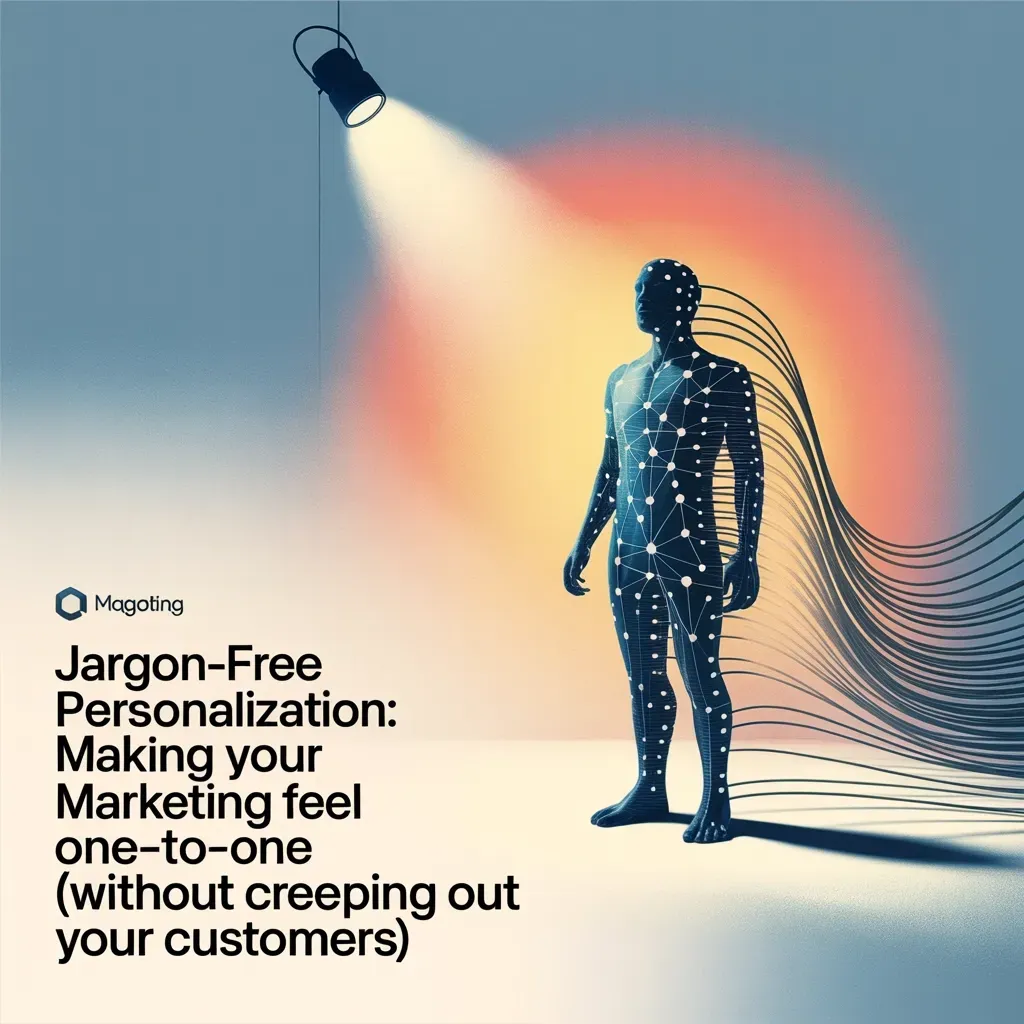

The Personalization Tightrope: Being Helpful vs. Being Creepy
We’ve all been there. You’re chatting with a friend about needing new trainers, and suddenly your social feeds are flooded with shoe ads. Coincidence? Maybe. Creepy? Definitely.
In today’s marketing world, personalization isn’t just nice to have—it’s expected. Research shows that 80% of consumers are more likely to buy from brands that offer personalized experiences. But there’s a fine line between “Wow, they really get me!” and “How did they know that?!”
As a small business owner, you want to create that magic feeling of speaking directly to each customer without sending them running for the hills. The good news? You don’t need fancy tech or a massive budget to do personalization right.
When Does Personalization Cross the Line?
Before diving into the “how,” let’s talk about when personalization feels intrusive:
- Using information customers didn’t knowingly share with you
- Being too specific about their behavior (“We noticed you abandoned your cart at exactly 3:42 PM yesterday…”)
- Making assumptions about personal circumstances (“Since your relationship status changed…”)
- Following them across devices without permission
- Knowing too much about their location (“We see you’re just around the corner from our shop right now!”)
The golden rule? If your personalization would make you uncomfortable as a customer, it probably crosses the line.

The Three Pillars of Customer-Friendly Personalization
1. Be Transparent About What You Know (and How)
Nothing feels creepier than a brand that seems to know things about you through mysterious means. Simply being upfront changes everything:
✅ DO: “Based on your recent purchases, you might like these complementary products…”
❌ DON’T: Make recommendations without explaining why they’re seeing them
Quick win: Add simple explanations like “Recommended because you viewed…” or “Popular with customers who bought what’s in your basket” to show the logical connection.
2. Focus on Relevance That Adds Real Value
Personalization should solve problems and make life easier—not just prove you can track people.
✅ DO: Use previous orders to simplify reordering (“Time to restock your favorite coffee beans?”)
❌ DON’T: Send personalized messages that don’t actually help the customer
Quick win: Look at your top 3 customer questions or pain points. Create personalized content that directly addresses these issues based on where they are in their journey with you.
3. Give Customers Control (And Actually Mean It)
Nothing builds trust faster than giving customers the steering wheel:
✅ DO: Make preference settings easy to find and use
❌ DON’T: Hide opt-out options in tiny text or make them navigate through multiple pages
Quick win: Create a simple preference center that lets customers choose exactly what types of communications they want and how often.
Six Practical Ways to Personalize Without the Creep Factor
1. Start With Information Freely Given
The safest personalization uses information customers actively provide:
- Order history (what they’ve bought)
- Wishlist items (what they want)
- Browsing behavior on your site (what they’re interested in)
- Explicit preferences they’ve shared
- Survey responses they’ve submitted
2. Use Contextual Relevance Instead of Personal Data
Some of the most effective personalization isn’t about the person at all—it’s about the context:
- Season or weather (“Rainy day essentials”)
- Local events (“Getting ready for the town festival?”)
- Time of day (breakfast specials in the morning)
This approach feels thoughtful without being intrusive.

3. Perfect Your Email Marketing Approach
Email remains the personalization sweet spot—customers expect it and you have permission to be there:
- Segment by purchase history rather than assumptions about who they are
- Celebrate milestones like anniversaries of their first purchase
- Send behavior-triggered emails that make sense (abandoned cart, product review requests)
- Personalize subject lines with their name or relevant information (but not in every email—it gets old fast)
Quick win: Create 3-5 customer segments based on purchase frequency or product categories, then tailor your next newsletter to each group.
4. Make Your Website Adapt (Subtly)
Your website can feel personalized without tracking every move:
- Remember returning visitors and welcome them back
- Show recently viewed items to help them pick up where they left off
- Recommend complementary products based on what’s in their cart
- Adjust navigation to highlight categories they frequently browse
Quick win: Add a “Recently Viewed” section to your product pages to help customers easily find items they were considering.
5. Use Social Proof Instead of Personal Data
Sometimes the most effective personalization isn’t about the individual at all:
- “Customers like you also bought…”
- “Popular in your area”
- “Trending this week”
This approach feels personalized but relies on aggregate data, not individual tracking.
6. Make Loyalty Programs Work Harder
Loyalty programs create a perfect opportunity for personalization that customers actually want:
- Personalized rewards based on purchase history
- Early access to products in categories they frequently shop
- Special offers on their birthday or customer anniversary
- Progress updates toward their next reward

Real-World Examples That Get It Right
The Local Coffee Shop Approach
Consider how your favorite local coffee shop personalizes service:
- They remember your usual order
- They might ask if you want “the usual”
- They notice when you try something new and ask how you liked it
- They tell you about new items similar to what you usually enjoy
This natural, helpful approach works brilliantly online too.
The Recipe Site Strategy
Recipe websites often nail personalization:
- “Based on your saved recipes, you might enjoy these dinner ideas…”
- “We noticed you’ve been browsing quick meals—here are our fastest weeknight dinners”
- “Since you loved our curry recipe, here are 5 more with similar flavors”
This feels helpful rather than intrusive because it’s directly related to your interactions with them.
Measuring Success Without Getting Technical
How do you know if your personalization efforts are working? Look for these simple indicators:
- Increased repeat purchases
- Higher average order value
- More time spent on your website
- Better email open and click rates
- Positive customer comments about your recommendations
- Lower unsubscribe rates
Most importantly, listen to customer feedback. If people comment positively about how you “always know what they need” or “make shopping easy,” your personalization is hitting the mark.
Start Small, Learn Fast
You don’t need to implement everything at once. Begin with these steps:
- Audit what customer information you already have (purchase history, email engagement, etc.)
- Pick one channel (email is often easiest) to start personalizing
- Test a simple personalization (like product recommendations based on past purchases)
- Ask for feedback directly from customers
- Measure results and adjust your approach
The Bottom Line: It’s About Relationships, Not Data
The best personalization doesn’t feel like marketing technology—it feels like good customer service. When done right, customers shouldn’t even notice the machinery behind your personalization.
Think of it this way: good personalization is like a thoughtful friend who remembers what you like and suggests things you might enjoy—not the creepy acquaintance who somehow knows details about your life you never shared.
By focusing on transparency, relevance, and customer control, you can create marketing that feels personal and helpful rather than intrusive or manipulative. And that’s the kind of personalization that builds long-term customer relationships.
Want to learn more about creating effective, customer-friendly marketing strategies? Check out our other resources on digital marketing best practices or contact us to discuss how we can help your business grow with marketing that respects your customers while driving results.