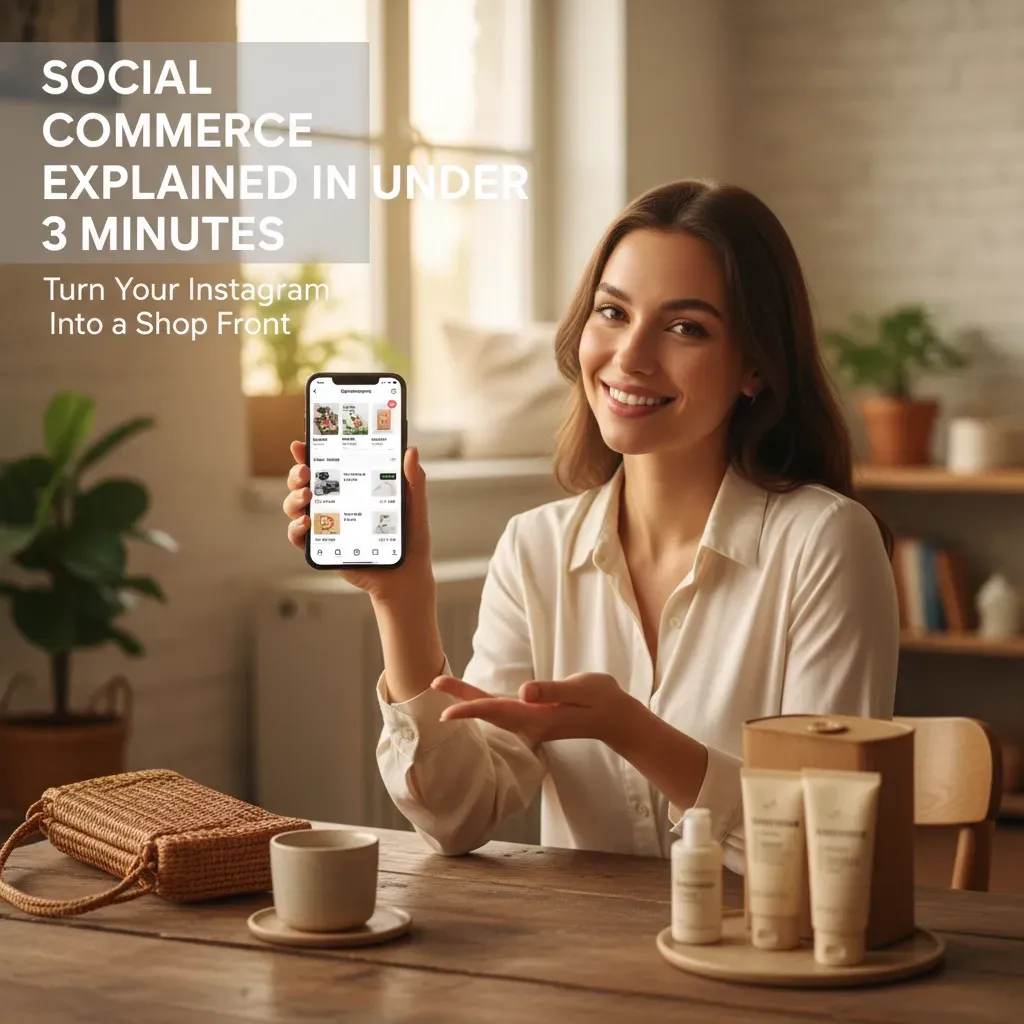
Social Commerce Explained in Under 3 Minutes: Turn Your Instagram Into a Shop Front
Social Commerce Explained in Under 3 Minutes: Turn Your Instagram Into a Shop Front
October 28, 2025
6 min read
Right, let’s cut to the chase. Your Instagram isn’t just a pretty photo album anymore – it’s your next sales channel. Social commerce is basically letting customers buy your stuff without ever leaving Instagram, and it’s absolutely brilliant for UK small businesses.
Think about it: your potential customers are already scrolling through Instagram for hours each day. Instead of trying to drag them away to your website (where half of them will get distracted and wander off), you’re bringing the shop to them. Smart, right?
What Exactly Is Social Commerce?
Social commerce is selling products directly through social media platforms. No redirects, no “click here to visit our website” nonsense. Your customers see your product, tap it, buy it, done. It’s like having a shop window that’s open 24/7, right in their pocket.
For UK small businesses, this is a game-changer. Whether you’re running a café in Edinburgh, selling handmade jewellery from your kitchen table, or you’re a plumber who’s branched out into selling tools, Instagram Shopping can work for you.
Why Instagram Shopping Is Perfect for Small Businesses
Let’s be honest – most small business owners don’t have time to mess about with complicated e-commerce platforms. Instagram Shopping is different. It’s built into an app you’re probably already using, and your customers definitely are.
Here’s what makes it brilliant:
• No website required – You can sell without building a full e-commerce site
• Mobile-first – Perfect for how people actually shop these days
• Visual storytelling – Show your products in action, not just boring product shots
• Impulse buying friendly – Customers can buy in the moment, not three weeks later when they’ve forgotten about you
The numbers don’t lie either. Instagram reports that 70% of shopping enthusiasts turn to the platform for product discovery. That’s your customers, right there, waiting for you to make buying easy for them.
Setting Up Your Instagram Shop (The Simple Version)
Don’t worry – this isn’t as technical as setting up your router. Here’s how to get your Instagram Shop running:
Step 1: Sort Your Business Profile
First things first, you need a business or creator account. If you’re still rocking a personal profile, it’s time to grow up. Go to Settings → Account → Switch to Professional Account. You’ll also need a Facebook Business Page (yes, even if you hate Facebook – it’s just how the system works).
Step 2: Connect Your Products
This is where you tell Instagram what you’re selling. You’ve got two main options:
Use Commerce Manager (Facebook’s free tool) if you want to upload everything manually
Connect Shopify or another e-commerce platform if you’ve already got your products set up elsewhere
For each product, you’ll need a decent photo, description, price, and a unique identifier (fancy name for a product code). Don’t overthink the codes – “BLUE-MUG-001” works just fine.
Step 3: Get Approved
Instagram needs to check you’re legit (fair enough). This usually takes a few days, but sometimes up to a week. Use this time to plan your first shoppable posts.
Making It Work for Different Business Types
Retail Businesses
If you’re selling physical products, this is your bread and butter. Tag products in lifestyle shots, not just boring product photos. Show that jumper on a real person, not hanging on a wall. Use Stories to create “try-on” content, and don’t forget about Instagram Live shopping events.
Hospitality Businesses
Restaurants and cafés can sell merchandise, gift cards, or even food boxes. That branded coffee mug or your famous scone recipe as a kit? Perfect Instagram Shop material. Hotels can sell experience packages or room upgrades.
Trade Businesses
Yes, even if you’re a plumber or electrician, this can work for you. Sell the tools you recommend, maintenance kits, or branded merchandise. Your followers trust your expertise – use it.
The Real Benefits (Beyond Just Sales)
Here’s what small business owners tell us after setting up Instagram Shopping:
“I thought it would be complicated, but my teenage daughter set it up in about an hour. Now I’m selling my homemade preserves to people all over Scotland without any of the hassle of packaging and posting from a website.” – Sarah, artisan food producer from Inverness
The benefits go beyond the obvious sales boost:
• Better customer data – You’ll learn more about who’s buying what
• Reduced cart abandonment – Fewer clicks means fewer people getting distracted
• Increased brand trust – Professional-looking shop features make you look more established
• Time savings – No switching between multiple platforms to manage sales
Getting Your Content Right
The secret sauce isn’t just having the shop set up – it’s creating content that makes people want to buy. Here’s what works:
Show, Don’t Just Tell
Instead of posting a photo of your product on a white background, show it being used. If you’re selling coffee, show the steam rising from the mug. If you’re a decorator selling paint, show the transformed room.
Use User-Generated Content
When customers post photos using your products, repost them (with permission) and tag the products. Nothing sells like seeing real people happy with your stuff.
Create Urgency (But Don’t Be Annoying)
Limited-time offers and “only 3 left” messages work, but use them sparingly. Your followers will spot fake urgency a mile away.
Common Mistakes to Avoid
We’ve seen plenty of small businesses get this wrong, so here are the biggies to avoid:
• Forgetting to tag products – Seems obvious, but it happens more than you’d think
• Using terrible product photos – Blurry, dark, or cluttered images kill sales
• Ignoring Stories – Your Instagram Stories disappear after 24 hours, but they’re gold for promoting products
• Not engaging with comments – If someone asks a question about a tagged product, answer quickly
How Donut Pig Can Help
Look, setting up Instagram Shopping isn’t rocket science, but getting it right and making it profitable? That takes expertise. At Donut Pig Digital Marketing, we specialise in social media management for Scottish small businesses, and social commerce is one of our favourite tools.
Here’s what we do differently:
Fixed-Price Support – No nasty surprises at the end of the month. You know exactly what you’re paying, whether we’re setting up your shop, creating shoppable content, or managing your entire social media presence.
Local Knowledge – We understand the UK market and Scottish business culture. Your content will feel authentic, not like it’s been created by someone who’s never heard of shortbread.
Jargon-Free Approach – We explain everything in plain English. No confusing technical terms or marketing speak.
The results speak for themselves. Our clients typically see a 40% increase in direct sales within three months of setting up their Instagram Shop properly.
What’s Next for Social Commerce?
Instagram isn’t standing still. They’re constantly adding new features like live shopping, AR try-ons, and better integration with messaging. The businesses that start now will have a massive head start over those who wait.
Facebook (Instagram’s parent company) is betting big on social commerce, especially after seeing how successful it’s been in markets like China. This trend isn’t going anywhere – if anything, it’s going to get bigger and more sophisticated.
Ready to Turn Your Instagram Into a Money-Making Machine?
Setting up Instagram Shopping is just the beginning. The real magic happens when you create a proper strategy around it, produce content that converts, and integrate it with your other marketing efforts.
If you’re ready to stop treating Instagram like a hobby and start using it as the powerful sales tool it can be, we’re here to help. Our team at Donut Pig knows exactly what works for UK small businesses, and we’ll help you avoid the common pitfalls that waste time and money.
Ready to get started? Drop us a message at Donut Pig Digital Marketing and let’s chat about turning your Instagram into your best-performing sales channel. No commitment required – just an honest conversation about what’s possible for your business.
Your competitors are probably still trying to figure out how to get people to their website. While they’re doing that, you could be selling directly to customers who are already engaged with your brand. The choice is yours.