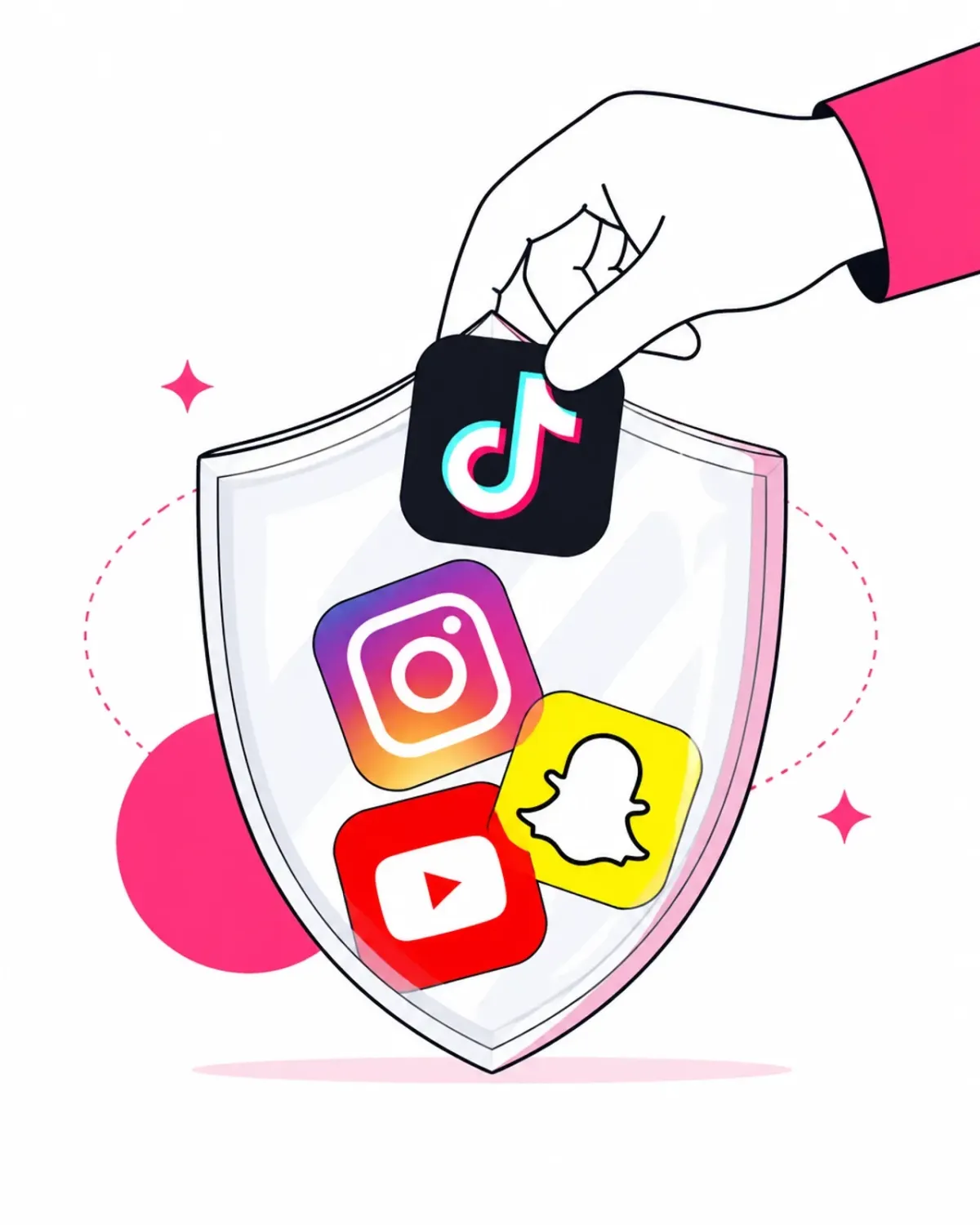

Today marks a massive shift in the UK’s digital landscape. Prime Minister Keir Starmer has officially announced a full ban on social media for children under the age of 16. It’s a move that has been bubbling under the surface for a while, sparked by a huge national consultation where the vast majority of parents said "enough is enough."
At Donut Pig Digital Marketing, we spend our lives in the world of hashtags, algorithms, and engagement rates. You might expect a social media management agency to be up in arms about this. Surely fewer users mean less "reach"? Surely this is bad for business?
Actually, we couldn't be happier. We are fully behind this change, and we think it’s a brilliant step forward for the mental health of the next generation. Here is why we’re backing the ban and what it means for you as a small business owner.
Putting People Before Platforms
As an agency that provides affordable social media management for small businesses, we know the power of these platforms better than most. We see how they can grow a brand, find new customers, and build communities. But we also see the darker side of the "addictive by design" nature of social media.
We’ve always believed that marketing should be a force for good. It should connect people with products and services they actually need. It shouldn't be about trapping vulnerable young minds in an endless scroll of filtered reality and harmful content.
Supporting this ban isn't about being "anti-tech", it’s about being "pro-childhood." We want children to be children, not data points for a Silicon Valley algorithm. If that means our potential "audience" for some clients gets a little smaller, so be it. Quality always beats quantity, and ethics always beats engagement.
A Word from the Top: Shaun’s Perspective
Donut Pig isn't just a faceless agency; we’re a team of real people, many of whom are parents. Our founder, Shaun Moat, has been a vocal supporter of tighter regulations for years.
He puts it simply:
"Now that my children are grown up, I’ve seen first-hand the damage social media can do to children, and I fully support the ban on under-16s."
This isn't just a business stance; it’s a personal one. When you see first-hand the impact that 24/7 connectivity and social pressure can have on a developing mind, you realise that some things are more important than a "Follower Count."

The Lowdown: What’s Actually Happening?
The government plans to pass the new regulations before Christmas, with the ban likely coming into force by Spring 2027. Here is a quick breakdown of what we know so far:
- The Platforms Involved: The ban covers the heavy hitters: TikTok, Instagram, Snapchat, Facebook, Threads, X (Twitter), YouTube, and Reddit.
- The Age Limit: There will be a hard age limit of 16.
- Enforcement: The burden will fall on the tech giants, not parents. Social media providers will be required to use "highly effective age assurance systems", including facial recognition scans and digital IDs.
- The Exception: Interestingly, WhatsApp is currently excluded from the ban because the government views it more as a private messaging tool for family and essential communication, rather than a public-facing social discovery platform.
For small business owners, this creates a clear boundary. The "under-16" market is effectively moving offline (or at least, off-social).
What This Means for Your Small Business
If you’re a UK small business owner, your first thought might be: "Wait, how do I reach the younger generation now?"
The truth is, if your business was heavily relying on targeting 13-to-15-year-olds directly on TikTok, your strategy needs to change. But for the vast majority of our clients, from local shops to professional services, this is actually an opportunity to sharpen your brand marketing strategy.
1. Shift Your Focus to the Gatekeepers (The Parents)
Parents have always been the primary decision-makers for household spending. Instead of trying to "go viral" with teens, your marketing should now focus more than ever on the people holding the wallet. Parents want to see reliability, safety, and value. Your social media content should reflect that.
2. Double Down on Owned Media
We’ve said it before, and we’ll say it again: you don't own your social media followers. Mark Zuckerberg and Elon Musk do. This ban is a perfect reminder of why you need a brilliant website design + hosting package and a solid email marketing list. When the rules of social media change overnight, your website and your email list are the only things you truly control.
3. Ethical Marketing is Good Marketing
In 2026 and beyond, customers care about who they are buying from. By aligning your business with ethical standards, like supporting the protection of children online, you build trust. A brand that says "we care about your kids' safety" is a brand people want to support.

Strategy Shift: Adapting to the New Normal
Don't panic. The digital world isn't ending; it’s just getting a much-needed tidy-up. Here is how we recommend you adapt:
- Review Your Audience: Take a look at your analytics. How much of your current engagement comes from the under-16 bracket? If it’s high, it’s time to rethink your content pillars.
- Invest in Search: If people aren't discovering you via a teen's "For You Page," they’ll be looking for you on Google. Ensuring your SEO is top-notch is more vital than ever.
- Refine Your Paid Social: If you use paid social, you’ll need to ensure your targeting parameters are updated to exclude the newly restricted age groups once the ban goes live. This will actually save you money by ensuring your ads aren't served to people who literally cannot legally use the app.
- Get Creative with Community: Local community groups and platforms like LinkedIn (which is largely unaffected by this news) will become even more important for B2B and local B2C connections.

Why We’re Not "Scared" for Our Clients
Some "experts" might tell you that social media is dying because of this. They’re wrong. Social media is simply evolving. By removing a demographic that shouldn't have been there in the first place, the platforms might actually become better for businesses.
Think about it: less noise, more intentional users, and a higher percentage of "ready-to-buy" adults. It’s about quality over quantity.
At Donut Pig, we’re all about making marketing "no-faff." This ban actually simplifies things. It draws a clear line in the sand. We can now focus 100% on building strategies that reach the right people, in the right way, without the ethical "grey area" of targeting children.
We might even have a sprinkle of extra time to focus on what really matters: getting you more enquiries and bookings from actual customers. 🍩
Wrapping Up: A Safer Digital Future
The UK’s social media ban for under-16s is a "big moment for our country," as the PM said. It’s a chance to reset our relationship with technology. As a business owner, you don't need to fear this change, you just need to be ready for it.
We’re proud to stand behind this move. We think it’s the right thing for our kids, our families, and ultimately, for the integrity of the digital marketing industry.

FAQs: The Under-16 Social Media Ban
Does the UK social media ban for under-16s include platforms like YouTube?
Yes, the government has indicated that YouTube is included in the ban. While it is often used for educational content, its social features and addictive algorithms mean it falls under the new restrictions for under-16s.
Could my business be fined if an under-16 follows my account?
No, the responsibility for enforcement lies with the social media platforms themselves. They are the ones required to implement the age-verification technology that keeps under-16s off the platform.
Can I still use TikTok for my business once the ban is in place?
Absolutely, TikTok can still be a powerful tool for reaching adults who are actually making buying decisions. You just will not be able to reach the 13-to-15 age group anymore.
Is WhatsApp included in the UK social media ban for under-16s?
WhatsApp is currently the main exception. It is viewed as a communication tool rather than a social media platform in the traditional sense, so children under 16 can still use it to stay in touch with family.
When is the UK social media ban for under-16s expected to start?
The legislation is expected to pass by the end of 2026, with full implementation likely by Spring 2027. That gives businesses time to review their marketing and make sensible changes.
Should I stop posting on social media because of the new under-16s ban?
Definitely not. Social media is still a strong way to build your brand and stay in touch with your customers. The key is to be more thoughtful about who you are trying to reach.
Ready to future-proof your marketing strategy? We’re here to help you navigate the changes without the stress.
Grab a quote or Book a call today and let’s get your strategy sorted.