Your Email List Is Your Quietest Sales Assistant: A Simple Guide for UK Small Businesses
Social media is useful, but it is rented space. Algorithms change, reach dips and your best post can disappear before lunch.
An email list is different. It gives you a direct, permission-based way to stay in touch with people who already know your business or have shown interest.
That makes it one of the simplest ways for a UK small business to generate repeat enquiries, bookings and sales without constantly chasing new followers.
Why an email list matters
An email list is not just a collection of addresses. It is a group of people who have said, “I’m interested in hearing from you.”
That matters because they may already be:
Previous customers
People who requested a quote
Local residents interested in your offers
Visitors to your shop, café or website
Guests who have stayed at your B&B
Potential clients who are not quite ready to buy yet
A tradesperson could use email to remind past customers about annual servicing. A café could share a new seasonal menu. A B&B could promote quieter midweek breaks.
You do not need thousands of subscribers. A small list of 100 relevant people is more useful than 5,000 strangers who never open your emails.
How to start your list ethically
The first rule is simple: do not buy a list.
Purchased lists are usually out of date, irritating for recipients and risky under UK data protection rules. Start with people who actively choose to hear from you.
Useful places to invite sign-ups include:
Your website
Your booking or enquiry form
Till receipts
Quote follow-ups
A QR code at your premises
Your email signature
Social media posts
Events, markets or networking meetings
Be clear about what people are signing up for. “Join our newsletter” is vague. Try:
> “Get one useful marketing tip each week, plus occasional offers from Donut Pig Digital Marketing.”
Make the benefit clear, but do not promise something you will not deliver.
You might offer a useful download, such as a seasonal maintenance checklist, local day-trip guide, menu planner or simple quote preparation sheet. Donut Pig’s free marketing tool can also inspire the sort of practical resource that attracts the right people.
Never hide marketing consent inside your terms and conditions. Use a clear, unticked box where appropriate, and explain how people can unsubscribe.
What should you send?
Your emails do not need to be masterpieces. They need to be useful, relevant and recognisably yours.
Good email content includes:
Helpful advice related to your service
Answers to common customer questions
New products, services or seasonal offers
Customer stories and results
Local events or useful recommendations
Availability updates
Behind-the-scenes information
Reminders for repeat services or bookings
A simple balance is:
Two useful emails
One promotional email
One reminder or personal update
For example, a local electrician might send:
“Three signs your consumer unit needs checking”
“What to do if a socket feels warm”
“Our autumn safety inspection slots are now open”
“A recent job: solving a recurring power cut”
The point is not to fill inboxes for the sake of it. It is to become useful enough that people are pleased to see your name.
A simple three-email welcome sequence
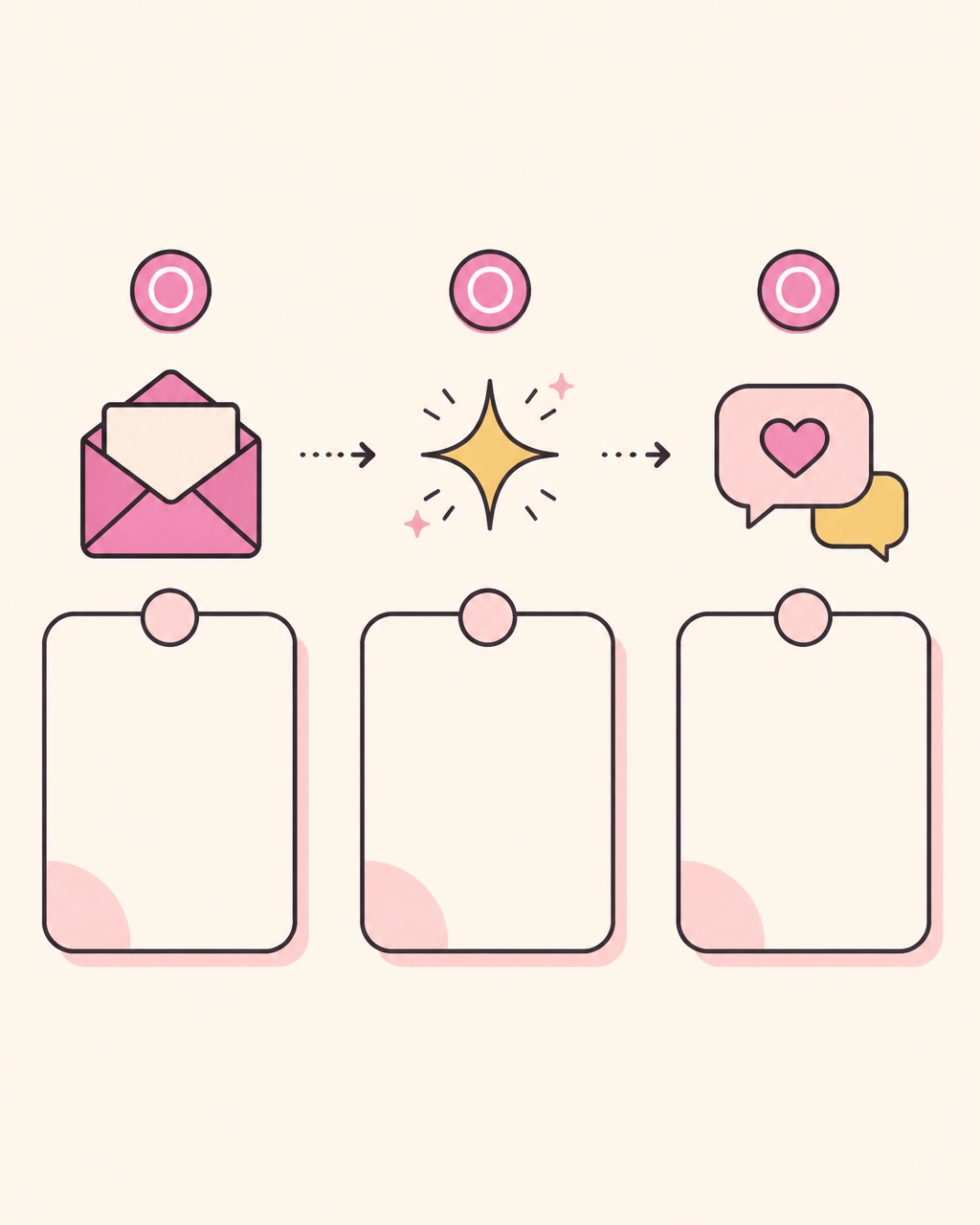
New subscribers should not be left wondering who you are. A short welcome sequence makes the relationship feel personal and gives people an easy next step.
Email 1: Welcome and set expectations
Send this immediately.
Include:
A friendly welcome
What they will receive
How often you will email
One useful resource or tip
A reply-based question
Example:
> “What are you hoping to improve in your business this month? Hit reply and tell us.”
Email 2: Help them solve a small problem
Send two or three days later.
Share a quick checklist, answer a common question or explain a mistake to avoid. Keep it practical rather than turning it into a sales brochure.
Email 3: Make a clear invitation
Send a few days after that.
Offer one sensible next step:
Book a call
Request a quote
Visit your shop
Reserve a table
Check availability
Download a guide
One clear call to action is usually better than six competing buttons.
How often should you email?
For most owner-managed businesses, once or twice a month is a sensible starting point.
Weekly can work if you have useful things to say. Daily is rarely necessary unless your customers expect frequent updates.
Choose a rhythm you can maintain. A brilliant monthly email is better than three enthusiastic messages followed by six months of silence.
Keep a simple content list on your phone. Add questions customers ask, jobs you complete, seasonal reminders and ideas as they happen.
UK GDPR and PECR in plain English
Email marketing in the UK is covered by the UK GDPR and the Privacy and Electronic Communications Regulations, usually called PECR.
For individuals, including many consumers and sole traders, you will normally need clear consent before sending marketing emails. Consent should be:
Freely given
Specific about marketing emails
Based on a positive action
Recorded so you know who agreed and when
Easy to withdraw
Pre-ticked boxes and “you gave us your email, so we’ll add you to our newsletter” are not safe assumptions.
There is a limited “soft opt-in” for existing customers, but it has conditions. The person must have bought from you or been discussing a purchase, you must be marketing your own similar products or services, and you must have offered an opt-out when collecting their details and in every later email.
Business-to-business rules can differ. Corporate email addresses may be treated differently under PECR, but named contacts still involve personal data. If you are unsure, check the ICO’s small-business marketing guidance or get independent legal advice.
Every marketing email should identify your business and include an easy unsubscribe option. As the ICO puts it:
> “For any marketing emails or text messages to people you must say who you are and tell them how to opt-out.”
Also link to your privacy policy, keep your list secure and remove people who unsubscribe.
Your simple 30-day email starter plan
Days 1–7: Prepare
Choose your email platform
Write a clear sign-up message
Create your form and privacy wording
Decide how often you will send emails
Brainstorm 10 useful topics
Days 8–14: Build
Add the form to your website
Add a sign-up link to your email signature
Create your welcome email
Invite existing contacts who have properly opted in
Create a useful download if it suits your business
Days 15–21: Send
Write your first helpful email
Use one clear call to action
Check every link
Send a test email to yourself
Review opens, clicks and replies
Days 22–30: Improve
Send the second email
Note which topics get replies or clicks
Remove obvious errors and old contacts
Plan next month’s two emails
Ask subscribers what they would like help with
FAQs
How many subscribers do I need?
There is no magic number. Start with people who are genuinely relevant. Ten engaged local customers can be more valuable than hundreds of uninterested contacts.
Can I email everyone who has ever bought from me?
Not automatically. Check whether you have valid consent or whether the soft opt-in conditions apply. If you are uncertain, ask an adviser rather than guessing.
What should my first email be about?
Welcome people, explain what they can expect and give them one useful tip. Avoid launching straight into a hard sell.
Is email marketing only for online businesses?
No. It works well for tradespeople, cafés, restaurants, shops, B&Bs and local services. Email is especially useful for repeat bookings and seasonal reminders.
What if I do not have time to write emails?
Start with one useful email a month. You can also get help with email marketing and wider marketing strategy, so the list keeps working while you run the business.
A well-run email list is a quiet sales assistant: it remembers to follow up, keeps your business familiar and gives interested people a clear next step.
At Donut Pig Digital Marketing, we help small businesses create practical marketing that brings in proper enquiries. We make your brand sizzle like bacon.